


Hotpot Go: Food Sort
4.5353.00 Reviews
App Specs
- Version
- 1.50.3
- Updated On
- License
- Free
- Downloads
- 1,000,000+
- Developer
- iKame Global JSC
- Categories
- Puzzle
- Platform
- Android
Screenshots
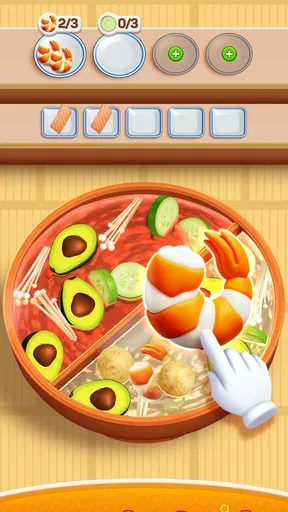
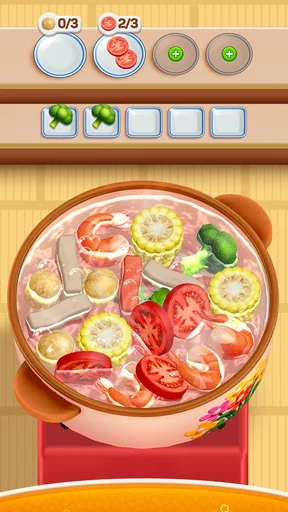
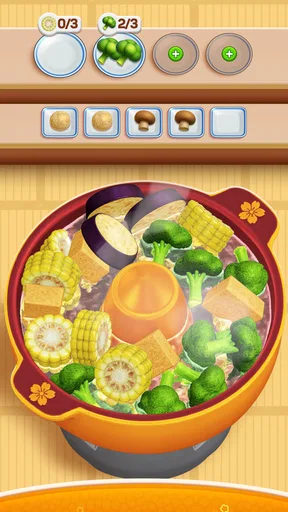
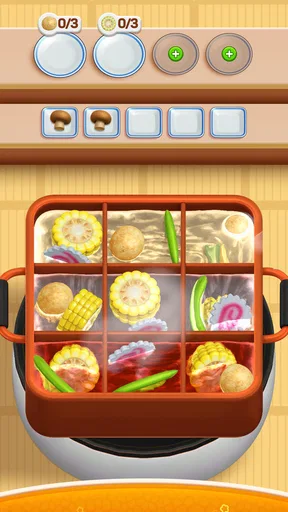
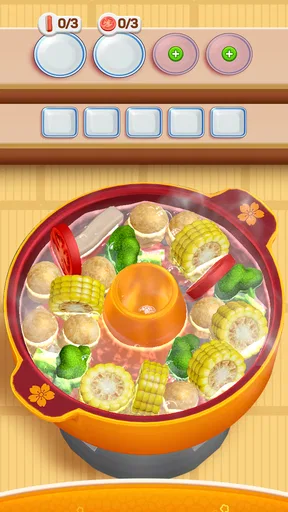

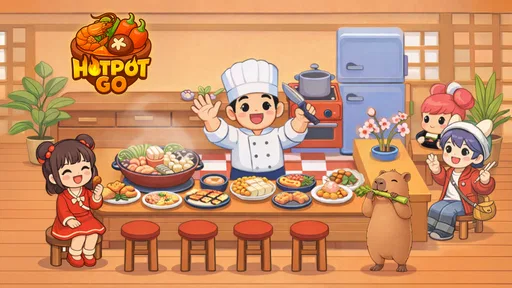
 Analysis by AppCompare
I reach for a food-sorting puzzle when I want something easy to pick up but still active enough to hold my attention. Hotpot Go: Food Sort has that appealing premise: ingredients need to be directed into the right places, and quick decisions matter. Its hotpot theme gives a familiar sorting idea a playful identity, though the appeal depends on enjoying the rhythm of matching and reacting rather than looking for a deep story or a long strategy campaign.
That distinction is useful before downloading. This is a free puzzle game from iKame Global JSC, with optional in-app purchases listed from $0.99 to $99.99 per item. The game is rated for Everyone, and its current version is 1.50.3. It has a 4.5 average from around 19,000 ratings, and more than a million installs. Those figures suggest a sizeable audience, but they don’t tell you whether its particular pace will suit you; the moment-to-moment loop is the better guide.
Start by sorting, not by settling in
The first useful question is whether you like games that ask for repeated quick input. In the published description of my play, ingredients arrive and I swipe them toward the right pots. That makes the basic action immediately legible: look, identify, move. You are not spending the opening learning a complicated control scheme, but the simplicity also means the challenge has to come from keeping your choices accurate as the action picks up.
That makes it a natural fit for small pockets of spare time. I can imagine opening it while waiting for a takeaway order or sitting through a short gap between errands, playing a little, then putting the phone away. It is less suited to a commute where I cannot look at the screen or to a moment when I need to give someone my full attention: a game built around quick swipes asks for your eyes and hands together.
How the feedback creates momentum
The satisfying part is the immediate connection between a decision and its result. A correct swipe keeps the sorting rhythm moving; a hesitation or mistake can interrupt that flow. In my experience, this kind of feedback makes a simple puzzle feel more involving than sorting at a leisurely pace. The controls feel intuitive, and the response to a swipe is smooth, which matters because even a small delay would make a fast sorting game feel unfair.
There is a trade-off, though. Speed can make a round lively, but it can also make play feel hectic if you prefer time to inspect every choice. If I notice myself swiping on reflex rather than reading the ingredients, I would slow down between rounds instead of treating every attempt as a high-score run. That small reset is a practical way to keep the game enjoyable rather than turning a casual break into a test of patience.
Rewards, variety, and reasons to return
The game’s levels bring in different ingredients and added challenges, so the same basic gesture has to cope with more than one familiar item. Mushrooms and tofu are among the foods mentioned in the original review, and the changing mix gives players something to recognise while they learn to react to new demands. The appeal is less about mastering a vast rulebook and more about adjusting to a puzzle that becomes busier as you progress.
Worth Reading Before You Choose

EA SPORTS FC Mobile 26 Is a Bigger Football Game, but It Takes Time

Flipboard Shows What News Apps Must Do Beyond the Feed

Switching to Android Auto Means Rethinking Your Driving Routine

Google Calendar Makes a Crowded Week Easier to Manage

Ludo King Makes the Most of the Minutes Between Plans

Baby Panda World Brings Quick Play to Modern Phones, but Its Game Library Feels Busy
Power-ups and obstacles are also part of the experience described here. They add variation, but they are worth judging by how they affect your decisions: a helpful tool can make a tricky moment feel manageable, while an obstacle can disrupt a comfortable rhythm. I would treat them as changes to the sorting problem, not as a guarantee that every later level will feel better than the last. If you enjoy adapting on the fly, that variation is a plus; if you want a calm, predictable puzzle, it may be the very thing that wears thin.
Daily challenges, a leaderboard, and in-game rewards are presented as reasons to return. The competitive board can give a personal score a context, especially if you enjoy comparing progress with friends, while a daily task offers a specific short-term goal. Rewards are described as helping unlock ingredients and themes, so there is a visible reason to keep playing beyond simply repeating a round. I would still ask myself whether I enjoy the sorting itself: a reward is most satisfying when it sits on top of a loop I already like.
What it does better than a slower sorting puzzle
Compared with a relaxed match or sort puzzle, this game leans toward speed, hand-eye coordination, and quick recognition. A slower alternative is better when I want to plan moves carefully or pause often without losing momentum. Hotpot Go is the stronger choice when I want an active little challenge and can give the screen my attention. That is a meaningful distinction, not a claim that one style is universally better; they suit different moods and situations.
It also occupies a different space from a lengthy puzzle adventure. There is no need to approach it as a story to follow over a long sitting. Instead, I would judge a session by whether the sorting remains enjoyable, whether the added ingredients keep my attention, and whether I want to try once more after a result. If you want elaborate narrative progression or strategic decisions that unfold over many turns, I would choose another kind of puzzle game.
Small habits that make play more satisfying
One useful approach is to use the opening moments of a round to settle into the ingredient recognition rather than immediately chasing speed. Knowing what you are looking at before the screen feels busy can reduce avoidable mis-swipes. When new items or obstacles appear, I would give myself a beat to register what has changed; the goal is not to hesitate forever, but to avoid carrying an old assumption into a new pattern.
It can also help to separate a score-focused attempt from a casual one. If I am trying to beat a previous result, I pay attention to clean decisions and avoid distracted play. If I only have a brief break, I treat the round as a quick mental reset and stop when the break ends. The leaderboard and daily challenges can supply goals, but they need not dictate every session. That boundary is especially useful in a game whose quick loop can make “one more try” feel easy.
Another practical consideration is spending. The game is free to download, while optional purchases range from $0.99 to $99.99 per item. I would begin without buying anything and see whether the regular sorting, challenge goals, and unlockable themes are enough for me. If a purchase is on the table, it is worth checking what it offers in the game before paying and deciding whether that benefit matters to your own play. The broad price range makes it sensible to be deliberate rather than assume every item is a small add-on.
Who will enjoy the loop—and who may not
I would recommend giving it a try if you like food-themed visuals, quick tactile controls, and puzzles where attention matters more than long-range planning. It is also a reasonable option for someone who wants a game that can fit between everyday tasks, provided those moments allow focused screen time. Its Everyone age rating makes it broadly positioned for players, though a fast sorting challenge may still be more appealing to some people than others.
I would skip it if the main thing you want is a slow, contemplative puzzle, a substantial story, or a game that can be played comfortably while your attention is elsewhere. Players who dislike repeated swiping may find the core action too narrow even when the ingredients and obstacles change. Likewise, if leaderboards make a casual game feel like pressure rather than motivation, it is easy to ignore that competitive angle and judge the game on the rounds themselves—or choose a puzzle that has no score-chasing element.
Hotpot Go: Food Sort is a game by iKame Global JSC, and its food theme is more than decoration in the sense that the ingredients define the sorting task. Still, the deciding factor is not whether hotpot sounds appealing; it is whether you enjoy identifying items and directing them quickly. That is the part I would focus on when deciding if it belongs on your phone.
First Impressions
Right off the bat, Hotpot Go: Food Sort had me intrigued. The concept is simple yet engaging: sort different ingredients into the correct categories to make the perfect hotpot. It sounds straightforward, but trust me, it's more challenging than you might think. The graphics are vibrant and colorful, making everything look absolutely appetizing. Who knew sorting virtual food could be this entertaining?
Gameplay and Features
Once you dive into the game, you'll find that it's all about speed and accuracy. The ingredients come flying at you, and it’s your job to swipe them into the right pots. And let me tell you, when you get in the zone, it feels incredibly satisfying. The controls are intuitive, and the game responds smoothly to every swipe.
There are multiple levels, each introducing new challenges and ingredients. From mushrooms to tofu, each level adds a new layer of complexity. And just when you think you've mastered it, the game throws in a curveball with special power-ups and obstacles. I found myself constantly strategizing, trying to beat my previous high scores.
Visuals and Soundtrack
The visuals in Hotpot Go: Food Sort are mouth-watering. The developers have done an incredible job of making the ingredients look realistic. The attention to detail is remarkable, and it really enhances the overall experience. The soundtrack is another highlight—upbeat tunes that keep you motivated and coming back for more.
Why You'll Keep Coming Back
What I love about this app is its replay value. No two games are the same, thanks to the random order in which ingredients appear. Plus, the leaderboard feature adds a competitive edge. I found myself constantly trying to outdo my friends and climb the ranks.
Another neat feature is the daily challenges. These add an extra layer of fun, keeping the gameplay fresh and exciting. It’s a great way to earn some in-game rewards, which can be used to unlock new ingredients and themes.
Final Thoughts
In the end, Hotpot Go: Food Sort offers a delightful mix of strategy and fun. It's perfect for those quick breaks during the day or when you just need to unwind. With its engaging gameplay, stunning visuals, and catchy tunes, it's no wonder this app has become a staple on my phone.
So, if you're in the mood for a game that's as challenging as it is entertaining, give Hotpot Go: Food Sort a try. Just a heads up: you might find yourself craving a real hotpot after a couple of rounds!
Pros
- Engaging and addictive gameplay.
- Visually appealing graphics.
- Simple controls for easy play.
- Variety of levels and challenges.
- Regular updates with new content.
Cons
- Ads can be intrusive at times.
- Limited free features available.
- In-app purchases can be pricey.
- Occasional bugs and glitches.
- Requires consistent internet connection.
FAQs for Hotpot Go: Food Sort
What is Hotpot Go: Food Sort all about?
Hotpot Go: Food Sort is an engaging puzzle game where players are tasked with sorting various ingredients into their correct boiling pots. The game combines strategic thinking and quick decision-making, offering a fun yet challenging experience. It's ideal for those who enjoy cooking-themed games and puzzles.
Is Hotpot Go: Food Sort free to play?
Yes, Hotpot Go: Food Sort is free to download and play. However, it offers in-app purchases that can enhance the gaming experience. These purchases typically include cosmetic items or hints that can help you progress through the more challenging levels.
What are the system requirements for Hotpot Go: Food Sort?
Hotpot Go: Food Sort is available for both Android and iOS devices. For Android users, you'll need a device running Android 5.0 or higher. iOS users should have iOS 11.0 or later. It's recommended to have a stable internet connection for the best gameplay experience.
Does Hotpot Go: Food Sort require an internet connection?
While Hotpot Go: Food Sort can be played offline, certain features such as leaderboards, cloud saves, and in-app purchases require an internet connection. Playing online also ensures you receive the latest updates and features as they become available.
How does Hotpot Go: Food Sort handle data privacy?
Hotpot Go: Food Sort takes data privacy seriously. The game collects minimal personal information necessary for gameplay, and this data is protected in accordance with privacy laws. Players can review the privacy policy within the app for more detailed information on data handling.


